
NEWS & STORIES FROM OPUS NEWTON | SENIOR LIVING IN NEWTON, MA
There’s a lot to know about Opus Newton.
From the latest news to stories about Opus residents, you’ll find it all here.
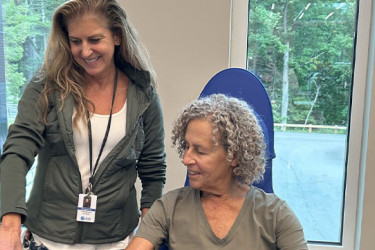
Meet the Team: Denise Buckley, Fitness Program Manager
Denise Buckley is Fitness Program Manager at the 2Life Nahanton Campus, where she is dedicated to promoting health, wellness, and active living for both 2Life Opus and Coleman House residents. We recently had the opportunity to chat with Denise about her background, what her work entails, the fitness resources offered on the Nahanton campus, and what she loves most about her job.
Thanks for making the time to talk with us, Denise. Can you share what your journey to the 2Life Nahanton campus was like?
Denise: Before coming here, I was the Healthy Living Director at the Waltham YMCA of Greater Boston, where I worked for 18 years. I oversaw all of the group exercise classes — a total of 92 land- and water-based classes — the personal training program, and specialty health programs. I’m also a certified LIVESTRONG® Personal Trainer for cancer survivors. I joined the team here at the Nahanton campus in August 2025, just before Opus opened.
What does your job entail and what is a typical day like?
Denise: As part of the Health and Wellness team, I oversee the fitness program for the entire Nahanton campus, and I work with the team on fall prevention and following up if someone does fall. Our larger team also works together to conduct fitness assessments for new residents and to recognize any mobility challenges a resident might be having such as balance or strength, so we can help improve their quality of life.
The multidisciplinary team approach is a really great benefit to residents. Every member of the staff is looking out for them and communicating if we notice a potential need. We’re a true community and that includes both residents and staff.
My days are quite full. Early each morning I teach a class for the staff. Three mornings a week I have a department head meeting, and Monday through Friday I teach a fitness class called Full Body. Full Body is a little bit of everything — cardiovascular, aerobics, hand weights, and core strengthening. We exercise all the major muscle groups, work on balance training to support stability and overall mobility, and we add a nice stretch at the end. The rest of my day usually includes meetings, doing assessments, and helping people become acclimated to the gym.
What other resources does the fitness program offer residents at Opus and Coleman House?
Denise: In the Opus building we have a beautiful gym that has windows all around and lots of light. The gym offers several pieces of state-of-the-art HUR equipment that are really easy to use because they set themselves based on a personalized card that the resident can tap on the machine like a hotel room key. We also have cardio equipment including a Peloton, a treadmill, lateral trainer, recumbent bike, a balance scale, and a large stretching table.
Our fitness studio is where group exercise classes are held. Instructors include a second full-time fitness specialist, contract fitness professionals, and me. Together, we offer a variety of classes designed for different fitness levels. Levels one and two are called Sit to Fit, and those are offered twice a week. We also offer yoga, tai chi, Zumba, barre, mat yoga, chair yoga, stretch & core classes, and Nia, which is a mind-body fitness technique, to just name a few. There’s a glass wall that overlooks the gathering area below, and the studio is equipped with mirrors, a barre, and other things such as yoga mats and hand weights. There’s also a large screen for streaming classes, and a Tonal® wall-mounted smart gym that uses electromagnetic resistance for individual exercise.
I recently earned my certification to offer a new class called Matter of Balance. It’s an evidence-based class by Maine Health that’s two hours a day for eight-days, with just 12 participants per session. We work on changing mindset and turning the fear of falling into a more proactive approach that looks at ways to create a safe environment in the home. Participants also learn work-arounds for things that traditionally are a challenge to balance such as a rainy day. They look at their apartments and ask questions such as: Do I have good lighting? Are there cords across walkways that could trip me? Do I have scatter rugs everywhere? So there’s group conversation and homework. We then offer a Strong and Steady class, which is a full-body approach to physically improving balance.
What are some of the most popular classes offered on the Nahanton campus?
Denise: Belly dancing is really popular, and we have a phenomenal instructor from the YMCA who comes to teach that every Monday. We also have line dancing each week and Zumba which is taught both in the Opus fitness studio and in the Coleman House multipurpose room. We also have an instructor who teaches seated Tai Chi at Coleman and a standing Tai Chi instructor who teaches three times a week. All of these classes are a big hit with residents.
We really respond to what residents want. For example, there’s an instructor in California who used to live in this area and taught a very popular Zumba class at the JCC and the senior center. She has a huge following, so when she moved people were upset. She started teaching her class via Zoom® and we stream her class on the fitness studio’s big screen on Sunday afternoons. Residents love it.
How have you seen the Nahanton Campus residents change in this first year of Opus being open?
Denise: From a fitness standpoint, it’s been almost a year, and I see that the people who have been taking fitness classes or using the gym are getting stronger. We try to make the classes more than a workout; they’re having fun while they’re moving. We have different music, we do karaoke, and I see smiles on their faces. It’s also nice to see that the seemingly simple movements we do can make a big difference. For example, we do “fist flings” — which are really helpful for people with arthritis — and then people tell me they’re now opening their own jars, and their hands don’t get stiff or hurt at night. Hearing the stories of their successes is really wonderful.
The Nahanton campus is really like a college campus. People coming in to live at Opus are sort of the “freshman class.” I see people getting to know each other, eating lunch together, helping each other out. Everyone is getting more comfortable. Some people are more extroverted, and some are more introverted, but that’s the beauty of community — you can be who you are, and you’ll find your place here. There are so many programs and ways to meet other people who share your interests.
Does the volunteer aspect of Opus contribute to that?
Denise: Absolutely! The volunteer program was a brilliant idea. People are getting involved and giving back to their fellow residents. People who like art are teaching art classes, and people who love being in the gym are helping other residents get comfortable with the equipment. There are so many ways to volunteer based on your own skills and interests, and it’s another great way to meet your fellow residents and form those bonds of community.
What’s your favorite part of your job?
Denise: The stories of people’s successes make everything I do worthwhile. But what attracted me to this position specifically was the opportunity to work with seniors. I love just getting to know all the interesting people who live here. We can learn so much just by talking with them. They’ve had these big life experiences and they’ve seen it all. They’ve gone from black-and-white television to color TV and now streaming on our cell phones. Plus, this is a real transition period for residents. They’re going from identifying themselves by their career or their families to now discovering who they are in this chapter of life. I love being part of that. I find it very rewarding coming to work every day.
Thanks for making the time to talk with us, Denise. Can you share what your journey to the 2Life Nahanton campus was like?
Denise: Before coming here, I was the Healthy Living Director at the Waltham YMCA of Greater Boston, where I worked for 18 years. I oversaw all of the group exercise classes — a total of 92 land- and water-based classes — the personal training program, and specialty health programs. I’m also a certified LIVESTRONG® Personal Trainer for cancer survivors. I joined the team here at the Nahanton campus in August 2025, just before Opus opened.
What does your job entail and what is a typical day like?
Denise: As part of the Health and Wellness team, I oversee the fitness program for the entire Nahanton campus, and I work with the team on fall prevention and following up if someone does fall. Our larger team also works together to conduct fitness assessments for new residents and to recognize any mobility challenges a resident might be having such as balance or strength, so we can help improve their quality of life.
The multidisciplinary team approach is a really great benefit to residents. Every member of the staff is looking out for them and communicating if we notice a potential need. We’re a true community and that includes both residents and staff.
My days are quite full. Early each morning I teach a class for the staff. Three mornings a week I have a department head meeting, and Monday through Friday I teach a fitness class called Full Body. Full Body is a little bit of everything — cardiovascular, aerobics, hand weights, and core strengthening. We exercise all the major muscle groups, work on balance training to support stability and overall mobility, and we add a nice stretch at the end. The rest of my day usually includes meetings, doing assessments, and helping people become acclimated to the gym.
What other resources does the fitness program offer residents at Opus and Coleman House?
Denise: In the Opus building we have a beautiful gym that has windows all around and lots of light. The gym offers several pieces of state-of-the-art HUR equipment that are really easy to use because they set themselves based on a personalized card that the resident can tap on the machine like a hotel room key. We also have cardio equipment including a Peloton, a treadmill, lateral trainer, recumbent bike, a balance scale, and a large stretching table.
Our fitness studio is where group exercise classes are held. Instructors include a second full-time fitness specialist, contract fitness professionals, and me. Together, we offer a variety of classes designed for different fitness levels. Levels one and two are called Sit to Fit, and those are offered twice a week. We also offer yoga, tai chi, Zumba, barre, mat yoga, chair yoga, stretch & core classes, and Nia, which is a mind-body fitness technique, to just name a few. There’s a glass wall that overlooks the gathering area below, and the studio is equipped with mirrors, a barre, and other things such as yoga mats and hand weights. There’s also a large screen for streaming classes, and a Tonal® wall-mounted smart gym that uses electromagnetic resistance for individual exercise.
I recently earned my certification to offer a new class called Matter of Balance. It’s an evidence-based class by Maine Health that’s two hours a day for eight-days, with just 12 participants per session. We work on changing mindset and turning the fear of falling into a more proactive approach that looks at ways to create a safe environment in the home. Participants also learn work-arounds for things that traditionally are a challenge to balance such as a rainy day. They look at their apartments and ask questions such as: Do I have good lighting? Are there cords across walkways that could trip me? Do I have scatter rugs everywhere? So there’s group conversation and homework. We then offer a Strong and Steady class, which is a full-body approach to physically improving balance.
What are some of the most popular classes offered on the Nahanton campus?
Denise: Belly dancing is really popular, and we have a phenomenal instructor from the YMCA who comes to teach that every Monday. We also have line dancing each week and Zumba which is taught both in the Opus fitness studio and in the Coleman House multipurpose room. We also have an instructor who teaches seated Tai Chi at Coleman and a standing Tai Chi instructor who teaches three times a week. All of these classes are a big hit with residents.
We really respond to what residents want. For example, there’s an instructor in California who used to live in this area and taught a very popular Zumba class at the JCC and the senior center. She has a huge following, so when she moved people were upset. She started teaching her class via Zoom® and we stream her class on the fitness studio’s big screen on Sunday afternoons. Residents love it.
How have you seen the Nahanton Campus residents change in this first year of Opus being open?
Denise: From a fitness standpoint, it’s been almost a year, and I see that the people who have been taking fitness classes or using the gym are getting stronger. We try to make the classes more than a workout; they’re having fun while they’re moving. We have different music, we do karaoke, and I see smiles on their faces. It’s also nice to see that the seemingly simple movements we do can make a big difference. For example, we do “fist flings” — which are really helpful for people with arthritis — and then people tell me they’re now opening their own jars, and their hands don’t get stiff or hurt at night. Hearing the stories of their successes is really wonderful.
The Nahanton campus is really like a college campus. People coming in to live at Opus are sort of the “freshman class.” I see people getting to know each other, eating lunch together, helping each other out. Everyone is getting more comfortable. Some people are more extroverted, and some are more introverted, but that’s the beauty of community — you can be who you are, and you’ll find your place here. There are so many programs and ways to meet other people who share your interests.
Does the volunteer aspect of Opus contribute to that?
Denise: Absolutely! The volunteer program was a brilliant idea. People are getting involved and giving back to their fellow residents. People who like art are teaching art classes, and people who love being in the gym are helping other residents get comfortable with the equipment. There are so many ways to volunteer based on your own skills and interests, and it’s another great way to meet your fellow residents and form those bonds of community.
What’s your favorite part of your job?
Denise: The stories of people’s successes make everything I do worthwhile. But what attracted me to this position specifically was the opportunity to work with seniors. I love just getting to know all the interesting people who live here. We can learn so much just by talking with them. They’ve had these big life experiences and they’ve seen it all. They’ve gone from black-and-white television to color TV and now streaming on our cell phones. Plus, this is a real transition period for residents. They’re going from identifying themselves by their career or their families to now discovering who they are in this chapter of life. I love being part of that. I find it very rewarding coming to work every day.
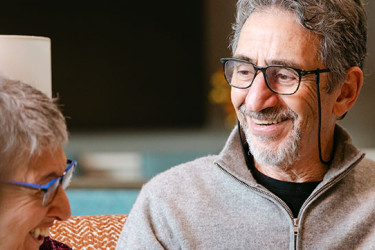
David Haddad: Volunteering for the greater good
When David Haddad and his wife chose to move to Opus Newton, the volunteer program was an exciting benefit. For David, the program was a symbol of the kind of life the couple wanted.
“That’s what was attractive,” says David, “being part of the community where we all help make it work. We’d be responsible for identifying the kind of initiatives that we want to start.”
That spirit captures the purpose of Opus Newton’s volunteerism model. Residents combine their skills, interests, ideas, and shared investment to create a vibrant community.
Since moving in, David has embraced that mission in several ways. He volunteers as a dining room host, an essential role that many residents take on. He welcomes neighbors and helps create a warm, social atmosphere at meals.
David has also helped spark conversations that strengthen connection. As part of Community, Connect, and Create, a resident-led dialogue group, he and fellow residents gather monthly to ask big questions: What does it mean to live in an intentional community? What kind of culture do we want to build together? Those conversations have already inspired new ideas and programs. Residents have organized informal evening meetups for neighbors, created stronger communication channels with staff, and continue imagining new ways to support one another.
As a psychologist, David has long been interested in positive psychology, which focuses on helping people build happiness and emotional wellness by recognizing their strengths, deepening gratitude, connecting with others, and finding greater meaning in life. He believes purpose comes from having opportunities to reflect on what matters most and then putting those values into action. At Opus Newton, he sees that happening every day.
“Everybody comes here with something to offer,” he says. “The volunteer program gives people a way to bring that into the life of the community.”
“That’s what was attractive,” says David, “being part of the community where we all help make it work. We’d be responsible for identifying the kind of initiatives that we want to start.”
That spirit captures the purpose of Opus Newton’s volunteerism model. Residents combine their skills, interests, ideas, and shared investment to create a vibrant community.
Since moving in, David has embraced that mission in several ways. He volunteers as a dining room host, an essential role that many residents take on. He welcomes neighbors and helps create a warm, social atmosphere at meals.
David has also helped spark conversations that strengthen connection. As part of Community, Connect, and Create, a resident-led dialogue group, he and fellow residents gather monthly to ask big questions: What does it mean to live in an intentional community? What kind of culture do we want to build together? Those conversations have already inspired new ideas and programs. Residents have organized informal evening meetups for neighbors, created stronger communication channels with staff, and continue imagining new ways to support one another.
As a psychologist, David has long been interested in positive psychology, which focuses on helping people build happiness and emotional wellness by recognizing their strengths, deepening gratitude, connecting with others, and finding greater meaning in life. He believes purpose comes from having opportunities to reflect on what matters most and then putting those values into action. At Opus Newton, he sees that happening every day.
“Everybody comes here with something to offer,” he says. “The volunteer program gives people a way to bring that into the life of the community.”
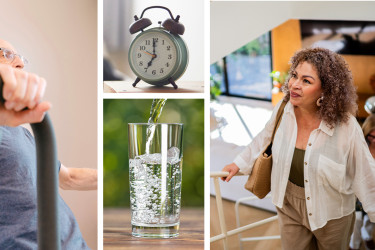
6 Healthy Habits You Can Start This Week
We all know that healthy behaviors are a good thing. They make us feel better and may even help us live longer. So why do we let unhealthy habits take over? Ask anyone who’s tried to cut down on sugary food and drinks, get more exercise, drink less alcohol, or spend less time scrolling on social media and they’ll tell you: change is hard.
Behavior that has become a habit — something we do without thinking about it — can be especially hard to change. The first step in changing an unhealthy habit is to become aware of what triggers it. Look for patterns in your behavior such as snacking while watching TV or scrolling social media in bed. Then develop strategies to counteract the behavior you want to change.
If you’re in the habit of scrolling on your phone in bed, set your phone to airplane mode and leave it in another room. If you’re drinking several diet sodas daily, put some bottled water on the counter where it’s easy to see. If you want to exercise more, schedule walks with a friend and hold yourselves accountable.
It also helps to know why you want to change an unhealthy habit. Figure out why it’s important to you. For example, do you want to be fit enough to enjoy travel and see all the destinations on your bucket list? Do you want to stay active and independent for as long as possible? Do you want to lower your blood sugar to prevent diabetes? Do you want to be able to fully celebrate your grandchildren’s milestones? The more personal the reason, the easier it will be to stay on track when you’re struggling.
Small changes can make a big difference.
Many people make the mistake of trying to make big changes all at once. It’s one reason why New Year’s resolutions often fail. A more effective way to change your behavior is to start small. By taking one small step that’s easily achievable you can build on your success. After all, you wouldn’t start training for a marathon by running 26 miles on day one, especially if you hadn’t run farther than the bus stop in years.
Break your goal down into micro-steps and celebrate your successes along the way. Acknowledging an achievement, no matter how small, will trigger the release of dopamine, the “feel-good” hormone that’s part of your reward system. Our brains want to repeat anything that makes us feel good.
Using positive reinforcement to strengthen healthy choices can make them automatic over time.
Healthy habits you can start this week.
To help you create healthy habits, we’ve listed six things you can do that support your well-being. Pick one that matters to you and incorporate it into your week. Keep going and you’ll find yourself gaining momentum, confidence, and self-esteem. Enjoy the process as your new behavior becomes a healthy habit.
Prep healthy snacks ahead of time.
Schedule time for movement.
Replace one sugary drink with water.
Take the stairs when possible.
Set a consistent bedtime.
Focus on progress, not perfection.
At Opus Newton, we empower residents to make choices that support all aspects of wellness. To learn more about our holistic approach, visit the Living Well page.
Behavior that has become a habit — something we do without thinking about it — can be especially hard to change. The first step in changing an unhealthy habit is to become aware of what triggers it. Look for patterns in your behavior such as snacking while watching TV or scrolling social media in bed. Then develop strategies to counteract the behavior you want to change.
If you’re in the habit of scrolling on your phone in bed, set your phone to airplane mode and leave it in another room. If you’re drinking several diet sodas daily, put some bottled water on the counter where it’s easy to see. If you want to exercise more, schedule walks with a friend and hold yourselves accountable.
It also helps to know why you want to change an unhealthy habit. Figure out why it’s important to you. For example, do you want to be fit enough to enjoy travel and see all the destinations on your bucket list? Do you want to stay active and independent for as long as possible? Do you want to lower your blood sugar to prevent diabetes? Do you want to be able to fully celebrate your grandchildren’s milestones? The more personal the reason, the easier it will be to stay on track when you’re struggling.
Small changes can make a big difference.
Many people make the mistake of trying to make big changes all at once. It’s one reason why New Year’s resolutions often fail. A more effective way to change your behavior is to start small. By taking one small step that’s easily achievable you can build on your success. After all, you wouldn’t start training for a marathon by running 26 miles on day one, especially if you hadn’t run farther than the bus stop in years.
Break your goal down into micro-steps and celebrate your successes along the way. Acknowledging an achievement, no matter how small, will trigger the release of dopamine, the “feel-good” hormone that’s part of your reward system. Our brains want to repeat anything that makes us feel good.
Using positive reinforcement to strengthen healthy choices can make them automatic over time.
Healthy habits you can start this week.
To help you create healthy habits, we’ve listed six things you can do that support your well-being. Pick one that matters to you and incorporate it into your week. Keep going and you’ll find yourself gaining momentum, confidence, and self-esteem. Enjoy the process as your new behavior becomes a healthy habit.
Prep healthy snacks ahead of time.
Schedule time for movement.
Replace one sugary drink with water.
Take the stairs when possible.
Set a consistent bedtime.
Focus on progress, not perfection.
At Opus Newton, we empower residents to make choices that support all aspects of wellness. To learn more about our holistic approach, visit the Living Well page.
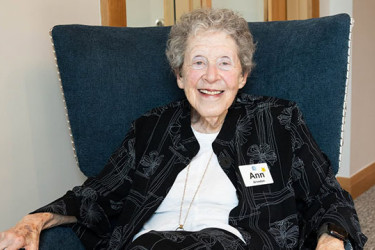
Ann Arvedon: A lifelong commitment to serving her community
At Opus Newton, volunteering not only serves the community but also shapes it. Once settled into their apartments, Opus Newton residents meet one-on-one with Ava Harder, Director of Resident Life and Volunteerism, to discuss the volunteer roles they are interested in and the ways in which they would like to contribute. The possibilities are endless.
Residents have created programming such as lecture series and classes, organized groups to help each other connect and adjust to the transition of moving into their new homes, put on performances in theater groups, and even began developing campus-wide communications for residents. In March, residents collectively logged more than 1,000 volunteer hours.
For Ann Arvedon, Opus Newton’s culture of engagement was a very attractive reason to move. “I like to be busy, and I like to help people,” she explains.
Ann has an extensive resume of lifelong service, such as becoming president of the Framingham, MA, chapter of the League of Women Voters and holding roles on several boards. She has always found opportunities to engage in meaningful ways.
At Opus Newton, she volunteers at the front desk on Sundays and has established a popular mahjong club that plays twice a week. Ann has played mahjong for more than twenty years and but also taught new players in a group in Framingham for a few years. While she no longer teaches, she enjoys welcoming beginners and making sure everyone feels comfortable joining in. Ann also helped with a voter registration event this past fall and is always happy to contribute to different community efforts that come her way. “Something’s always popping up,” she says.
Ann’s open-minded approach to volunteering extends to how she connects with others. She is known for bringing people together, hosting small gatherings in her apartment, and making sure no one feels left out.
For her, Opus Newton is not just a place to live. It’s a place to stay connected, involved, and surrounded by community.
Residents have created programming such as lecture series and classes, organized groups to help each other connect and adjust to the transition of moving into their new homes, put on performances in theater groups, and even began developing campus-wide communications for residents. In March, residents collectively logged more than 1,000 volunteer hours.
For Ann Arvedon, Opus Newton’s culture of engagement was a very attractive reason to move. “I like to be busy, and I like to help people,” she explains.
Ann has an extensive resume of lifelong service, such as becoming president of the Framingham, MA, chapter of the League of Women Voters and holding roles on several boards. She has always found opportunities to engage in meaningful ways.
At Opus Newton, she volunteers at the front desk on Sundays and has established a popular mahjong club that plays twice a week. Ann has played mahjong for more than twenty years and but also taught new players in a group in Framingham for a few years. While she no longer teaches, she enjoys welcoming beginners and making sure everyone feels comfortable joining in. Ann also helped with a voter registration event this past fall and is always happy to contribute to different community efforts that come her way. “Something’s always popping up,” she says.
Ann’s open-minded approach to volunteering extends to how she connects with others. She is known for bringing people together, hosting small gatherings in her apartment, and making sure no one feels left out.
For her, Opus Newton is not just a place to live. It’s a place to stay connected, involved, and surrounded by community.